‘Mind-reading’ AI: Japan analyze sparks moral discussion | Technological innovation Information
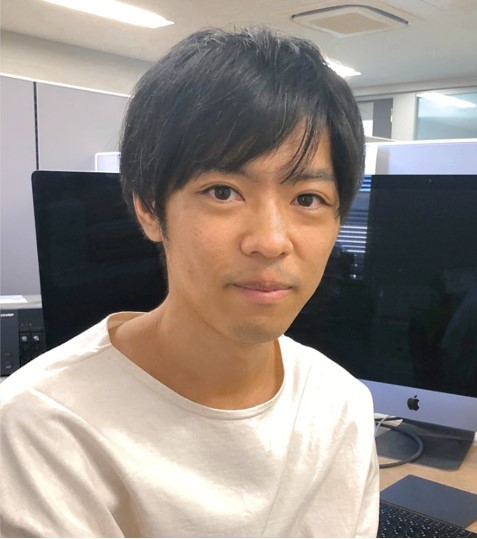
Tokyo, Japan – Yu Takagi could not feel his eyes. Sitting on your own at his desk on a Saturday afternoon in September, he viewed in awe as synthetic intelligence decoded a subject’s brain exercise to make visuals of what he was looking at on a display.
“I nevertheless keep in mind when I observed the 1st [AI-generated] images,” Takagi, a 34-12 months-aged neuroscientist and assistant professor at Osaka College, explained to Al Jazeera.
“I went into the toilet and looked at myself in the mirror and saw my deal with, and imagined, ‘Okay, that’s typical. Maybe I’m not going crazy’”.
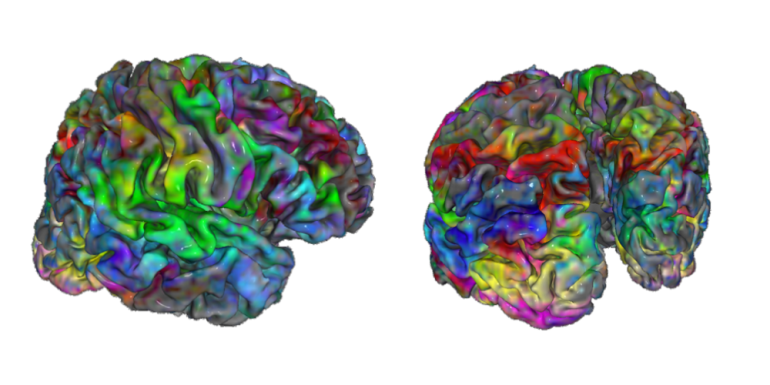
Takagi and his staff utilised Stable Diffusion (SD), a deep finding out AI model produced in Germany in 2022, to analyse the mind scans of exam topics revealed up to 10,000 images although inside an MRI machine.
Following Takagi and his investigation lover Shinji Nishimoto designed a basic product to “translate” brain action into a readable structure, Steady Diffusion was equipped to make large-fidelity photos that bore an uncanny resemblance to the originals.
The AI could do this regardless of not getting proven the images in advance or properly trained in any way to manufacture the final results.
“We actually did not be expecting this kind of outcome,” Takagi reported.
Takagi stressed that the breakthrough does not, at this position, symbolize thoughts-studying – the AI can only deliver images a individual has viewed.
“This is not intellect-reading through,” Takagi claimed. “Unfortunately there are a lot of misunderstandings with our investigation.”
“We just cannot decode imaginations or desires we think this is much too optimistic. But, of system, there is potential in the potential.”
But the development has even so raised issues about how this kind of technological know-how could be utilized in the potential amid a broader debate about the risks posed by AI frequently.
In an open up letter very last month, tech leaders which includes Tesla founder Elon Musk and Apple co-founder Steve Wozniak identified as for a pause on the improvement of AI thanks to “profound risks to modern society and humanity.”
In spite of his pleasure, Takagi acknowledges that fears about brain-looking at technological know-how are not with no merit, offered the probability of misuse by people with destructive intent or without having consent.
“For us, privacy troubles are the most significant point. If a government or establishment can browse people’s minds, it’s a really delicate challenge,” Takagi said. “There requirements to be substantial-amount discussions to make sure this can not happen.”
Takagi and Nishimoto’s research generated a lot buzz in the tech community, which has been electrified by breakneck developments in AI, together with the release of ChatGPT, which generates human-like speech in reaction to a user’s prompts.
Their paper detailing the conclusions ranks in the best 1 percent for engagement amid the more than 23 million exploration outputs tracked to date, in accordance to Altmetric, a details corporation.
The research has also been acknowledged to the Conference on Computer system Vision and Pattern Recognition (CVPR), set for June 2023, a widespread route for legitimising significant breakthroughs in neuroscience.
Even so, Takagi and Nishimoto are careful about finding carried absent about their conclusions.
Takagi maintains that there are two main bottlenecks to authentic mind reading: mind-scanning technological innovation and AI alone.
Even with improvements in neural interfaces – like Electroencephalography (EEG) brain computers, which detect brain waves via electrodes related to a subject’s head, and fMRI, which actions mind exercise by detecting modifications involved with blood flow – experts imagine we could be a long time away from remaining equipped to accurately and reliably decode imagined visual ordeals.

In Takagi and Nishimoto’s analysis, topics had to sit in an fMRI scanner for up to 40 several hours, which was high priced as effectively as time-consuming.
In a 2021 paper, researchers at the Korea Innovative Institute of Science and Technology observed that conventional neural interfaces “lack chronic recording stability” due to the delicate and complicated nature of neural tissue, which reacts in unconventional approaches when introduced into get hold of with synthetic interfaces.
Also, the scientists wrote, “Current recording techniques usually depend on electrical pathways to transfer the sign, which is inclined to electrical noises from surroundings. Since the electrical noises considerably disturb the sensitivity, achieving fine alerts from the concentrate on location with higher sensitivity is not nevertheless an easy feat.”
Current AI constraints present a next bottleneck, although Takagi acknowledges these capabilities are advancing by the day.
“I’m optimistic for AI but I’m not optimistic for brain engineering,” Takagi said. “I believe this is the consensus between neuroscientists.”
Takagi and Nishimoto’s framework could be used with brain-scanning equipment other than MRI, these kinds of as EEG or hyper-invasive technologies like the brain-laptop implants currently being developed by Elon Musk’s Neuralink.
Even so, Takagi believes there is presently very little sensible software for his AI experiments.
For a get started, the strategy can not nevertheless be transferred to novel topics. Because the condition of the mind differs among persons, you cannot directly utilize a product created for 1 man or woman to a further.
But Takagi sees a upcoming in which it could be utilised for medical, interaction or even enjoyment applications.
“It’s difficult to forecast what a successful medical software may be at this phase, as it is continue to very exploratory exploration,” Ricardo Silva, a professor of computational neuroscience at College College or university London and investigation fellow at the Alan Turing Institute, informed Al Jazeera.
“This might flip out to be one extra way of developing a marker for Alzheimer’s detection and progression analysis by assessing in which means 1 could place persistent anomalies in images of visible navigation jobs reconstructed from a patient’s brain exercise.”
Silva shares concerns about the ethics of know-how that could a person day be utilized for authentic brain looking at.
“The most urgent challenge is to which extent the information collector must be forced to disclose in full detail the makes use of of the info collected,” he reported.
“It’s a single point to indication up as a way of getting a snapshot of your more youthful self for, maybe, potential scientific use… It’s nonetheless a further absolutely different matter to have it used in secondary responsibilities these as internet marketing, or even worse, utilized in legal situations in opposition to someone’s individual interests.”
Even now, Takagi and his partner have no intention of slowing down their study. They are presently setting up variation two of their job, which will emphasis on improving the technologies and applying it to other modalities.
“We are now establishing a significantly much better [image] reconstructing method,” Takagi mentioned. “And it is happening at a incredibly rapid pace.”