
Merchant: How AI doomsday hoopla assists sell ChatGPT
You’ve possibly listened to by now: AI is coming, it’s about to transform everything, and humanity is not completely ready.
Artificial intelligence is passing bar exams, plagiarizing phrase papers, building deepfakes that are genuine enough to idiot the masses, and the robotic apocalypse is nigh. The federal government isn’t prepared. Neither are you.
Tesla founder Elon Musk, Apple co-founder Steve Wozniak and hundreds of AI scientists signed an open up letter this week urging a pause on AI progress before it receives as well effective. “A.I. could speedily eat the entire of human lifestyle,” three tech ethicists wrote in a New York Occasions op-ed. A cottage marketplace of AI hustlers have taken to Twitter, Substack and YouTube to exhibit the formidable prospective and electrical power of AI, racking up hundreds of thousands of sights and shares.
The doomscroll goes on. A Instances columnist had a series of discussions with Bing and wound up concerned for humanity. A Goldman Sachs report states AI could exchange 300 million positions.
The worry has produced its way into the halls of ability far too. On Monday, Sen. Christopher S. Murphy (D-Conn.) tweeted, “ChatGPT taught itself to do innovative chemistry. It wasn’t constructed into the product. No person programmed it to master challenging chemistry. It made the decision to train alone, then made its know-how available to any one who questioned.”
“Something is coming. We are not completely ready.”
Practically nothing of the type has took place, of program, but it is difficult to blame the senator. AI doomsaying is completely everywhere you go appropriate now. Which is particularly the way that OpenAI, the firm that stands to reward the most from absolutely everyone believing its products has the electrical power to remake — or unmake — the planet, wishes it.
OpenAI is powering the buzziest and most popular AI support, the textual content generator ChatGPT, and its technological innovation now powers Microsoft’s new AI-infused Bing research engine, the solution of a offer really worth $10 billion. ChatGPT-3 is totally free to use, a high quality tier that ensures far more stable obtain is $20 a thirty day period, and there is a complete portfolio of solutions accessible for buy to meet up with any enterprise’s text or graphic-generation needs.
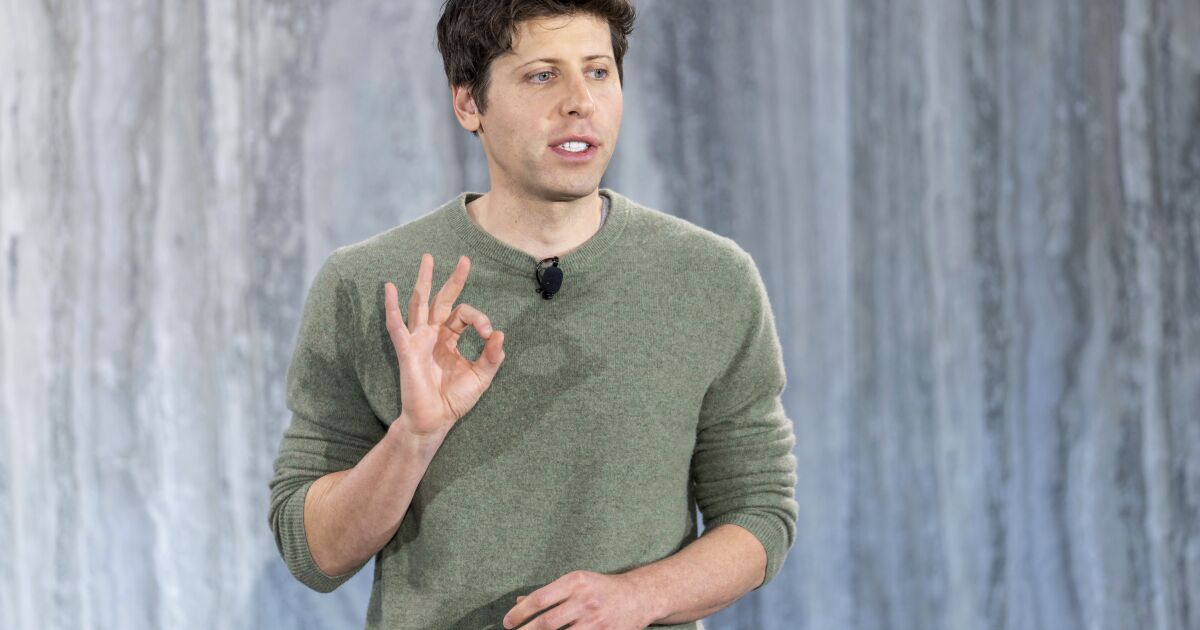
Sam Altman, the chief government of OpenAI, declared that he was “a minor little bit scared” of the know-how that he is assisting to establish and aiming to disseminate, for financial gain, as greatly as doable. OpenAI’s main scientist, Ilya Sutskever, reported previous week, “At some issue it will be really simple, if one particular desired, to induce a fantastic offer of harm” with the styles they are making accessible to any person willing to spend. And a new report produced and introduced by the business proclaims that its technology will put “most” work at some degree of chance of elimination.
Let’s take into account the logic powering these statements for a next: Why would you, a CEO or government at a significant-profile know-how business, frequently return to the general public stage to proclaim how nervous you are about the solution you are constructing and advertising?
Remedy: If apocalyptic doomsaying about the terrifying energy of AI serves your advertising system.
AI, like other, a lot more fundamental varieties of automation, isn’t a regular company. Scaring off buyers is not a worry when what you’re offering is the fearsome electric power that your support claims.
OpenAI has labored for a long time to thoroughly cultivate an image of alone as a staff of hoopla-evidence humanitarian experts, pursuing AI for the fantastic of all — which meant that when its second arrived, the community would be effectively-primed to acquire its apocalyptic AI proclamations credulously, as frightening but not possible-to-overlook truths about the point out of technological know-how.
OpenAI was founded as a analysis nonprofit in 2015, with a large grant from Musk, a observed AI doomer, with the goal of “democratizing” AI. The enterprise has prolonged cultivated an air of dignified restraint in its AI endeavors its said aim was to study and produce the know-how in a way that was liable and clear. The web site put up announcing OpenAI declared, “Our aim is to advance digital intelligence in the way that is most possible to gain humanity as a complete, unconstrained by a need to have to produce money return.”
For several years, this led the media and AI researchers to take care of the organization as if it was a analysis institution, which in convert authorized it to command larger stages of regard in the media and the tutorial local community — and bear considerably less scrutiny. It garnered superior graces by sharing illustrations of how highly effective its applications were becoming — OpenAI’s bots successful an esports championship, early illustrations of entire content articles published by its GPT-2 AI — even though exhorting the will need to be careful, and holding its designs secret and out of the arms of bad actors.
In 2019, the corporation transitioned to a “capped” for-income firm, though continuing to insist its “primary fiduciary duty is to humanity.” This month, nevertheless, OpenAI introduced that it was using the previously open up resource code that manufactured its bots probable non-public. The rationale: Its product or service (which is available for buy) was merely much too potent to possibility slipping into the completely wrong palms.
OpenAI’s nonprofit background even so imbued it with a halo of respectability when the company released a operating paper with scientists from the University of Pennsylvania final week. The investigate, which, yet again, was carried out by OpenAI itself, concluded that “most occupations” now “exhibit some diploma of exposure” to large language designs, or LLMs, this kind of as the one particular underlying ChatGPT. Increased-wage occupations have a lot more jobs with significant publicity. And “approximately 19% of jobs” will see at the very least 50 % of all the jobs they require exposed to LLMs.
These results were protected dutifully in the media, although critics, including Dan Greene, an assistant professor at College of Maryland’s Information and facts Studies College or university, pointed out that this was less a scientific evaluation than a self-fulfilling prophecy. “You use the new tool to notify its personal fortune,” he claimed. “The stage is not to be ‘correct’ but to mark down a boundary for community discussion.”
Regardless of whether OpenAI set out to turn out to be a for-gain enterprise in the 1st put, the conclusion end result is the same: the unleashing of a science fiction-infused advertising frenzy unlike anything at all in modern memory.
Now, the advantages of this apocalyptic AI promoting are twofold. Initially, it encourages users to attempt the “scary” services in concern — what improved way to crank out a excitement than to insist, with a specified presumed believability, that your new technology is so strong it could possibly unravel the entire world as we know it?
The next is much more mundane: The bulk of OpenAI’s income is unlikely to arrive from normal end users paying out for top quality-tier obtain. The company scenario for a rando paying out every month fees to access a chatbot that is marginally a lot more exciting and beneficial than, say, Google Lookup, is remarkably unproven.
OpenAI appreciates this. It is just about absolutely betting its for a longer time-expression long term on extra partnerships like the one particular with Microsoft and business specials serving huge organizations. That suggests convincing extra corporations that if they want to survive the coming AI-led mass upheaval, they’d improved climb aboard.
Enterprise bargains have generally been where by automation technological know-how has thrived — certain, a handful of consumers may possibly be fascinated in streamlining their day by day plan or automating responsibilities listed here and there, but the core sales focus on for productivity application or automated kiosks or robotics is management.
And a major driver in motivating organizations to acquire into automation technologies is and often has been fear. The historian of technological know-how David Noble demonstrated in his reports of industrial automation that the wave of workplace and factory ground automation that swept the 1970s and ‘80s was mostly spurred by managers publishing to a highly pervasive phenomenon that currently we recognize as FOMO. If firms think a labor-saving technologies is so powerful or economical that their competitors are guaranteed to undertake it, they never want to miss out on out — no matter of the greatest utility.
The terrific assure of OpenAI’s suite of AI services is, at root, that firms and persons will conserve on labor expenses — they can deliver the advert duplicate, art, slide deck displays, electronic mail advertising and information entry procedures rapid and cheap.
This is not to advise that OpenAI’s image and text turbines are not able of fascinating, wonderful or even unsettling items. But the conflicted genius schtick that Altman and his OpenAI coterie are placing on is wearing slender. If you are genuinely concerned about the security of your item, if you severely want to be a accountable steward in the advancement of an artificially intelligent device you consider to be extremely-highly effective, you do not slap it onto a search engine the place it can be accessed by billions of persons you really do not open the floodgates.
Altman argues that the technological know-how wants to be released, at this fairly early phase, so that his team can make issues and address probable abuses “while the stakes are quite reduced.” Implicit in this argument, however, is the idea that we really should only believe in him and his newly cloistered business with how best to do so, even as they operate to satisfy profits projections of $1 billion upcoming year.
I’m not stating do not be nervous about the onslaught of AI services — but I am expressing be nervous for the right causes. There’s a lot to be wary about, specifically provided the prospect that corporations most undoubtedly will come across the product sales pitch alluring and regardless of whether it will work, a lot of copywriters, coders and artists are out of the blue likely to discover their operate not essentially replaced but devalued by the ubiquitous and substantially less expensive AI providers on give. (There’s a motive artists have already released a class-action lawsuit alleging AI systems were being trained on their do the job.)
But the hand-wringing more than an all-highly effective “artificial standard intelligence” and the incendiary hoopla tend to obscure people nearer-phrase varieties of issues. AI ethicists and researchers such as Timnit Gebru and Meredith Whittaker have been shouting into the void that an summary anxiety of an imminent SkyNet misses the forest for the trees.
“One of the greatest harms of large language types is caused by proclaiming that LLMs have ‘human-competitive intelligence,’” Gebru claimed.
There is a true and genuine threat that this things will develop biased or even discriminatory outcomes, aid misinformation proliferate, steamroll about artists’ mental house and a lot more — specifically because a lot of Big Tech businesses just transpire to have fired their AI ethics groups.
It is perfectly reputable to be fearful of the electricity of a new technology. Just know that OpenAI — and all of the other AI businesses that stand to money in on the buzz — extremely considerably want you to be.

Enjoy L.A. Occasions Today at 7 p.m. on Spectrum Information 1 on Channel 1 or are living stream on the Spectrum News App. Palos Verdes Peninsula and Orange County viewers can enjoy on Cox Programs on channel 99.

:quality(70):focal(544x1110:554x1120)/cloudfront-eu-central-1.images.arcpublishing.com/businessoffashion/3STVJF35L5GVHDL5SP7D4BXBU4.jpg "Can Engineering Establish a Superior Current market for Fashion’s Unused Fabrics?")
