
Epic Systems, other tech firms want workers in office

Table of Contents
Major technology companies in the Madison area and nationally, most of which had at one time embraced remote work, are increasingly requiring employees to get back in the office for at least part of the work week.
With the COVID-19 pandemic winding down, electronic health records giant Epic Systems Corp. in January 2022 began requiring workers to spend almost all of their time at the company’s sprawling Verona campus.

Its policy requires nearly all of the privately held company’s 13,000 employees work from the office every day, though they can take 10 half-days each year to work remotely.
Technical Services Division Lead Nate Bubb said Epic’s policy is its “true North Star,” enabling the company to execute its mission of helping nurses and doctors do their best work.
He said Epic has monitored hybrid work trends and has decided in-person work is its only viable path forward, making the company stand out as one of the earliest and most passionate advocates of in-person work since the beginning of the pandemic.
People are also reading…
Bubb has been working at Epic for more than a decade and said that while the number of remote-work exception days may change, the intention won’t: In-person work is here to stay for Epic workers.

He said most of the employees he spoke with when Epic’s current remote work policy was created agreed with his team, and that his team talked with a wide variety of workers.
“Being able to walk down the hall and hop into a room, do complex things together, that’s the majority of the time,” Bubb said. “That will be the way we continue to serve our community.”
Meta’s upcoming commercial AI model targets competition with OpenAI and Google amidst copyright lawsuits.
A survey of 4,500 companies by Scoop, a company that helps businesses navigate remote work, found that 75% of tech companies — more than in other industries — were either fully remote or allowing employees to choose when to be in the office. But more companies were requiring employees to be in the office at least some days, especially at larger technology companies.
About 8% were requiring employees to be in the office full-time. It found that larger tech companies were more often requiring hybrid or in-office work.
‘Just as collaborative’
Some of Epic’s former employees say the company’s push to get employees back into the office early in the pandemic propelled their departure.
Cassy Smithies said she worked full time on Epic’s design team from June 2020 to May 2022.
“The (remote work) flexibility was one of the main reasons why I left because being there for my family was something really important to me,” Smithies said. “Now I’m in another role where I can do that and can drop things and go fly out for a week and then come back and get back into the office and be just as collaborative as before.”

Smithies now works a hybrid schedule as a senior product designer for Fetch, a Madison-based company behind a mobile app that helps consumers earn various rewards from retailers.
The argument since COVID restrictions began to ease in late 2020 has been that working from home eliminates the need to commute and provides workers with flexibility. The counter-argument is that in-person work makes for better employee collaboration and communication.
And Epic is not alone in requiring workers show up at the office.
Madison’s Exact Sciences Corp., known for its at-home cancer-screening test, Cologuard, offers a hybrid-work model. The company has around 6,300 employees globally, including 3,000 in the Madison area.
“We believe that remote work offers great convenience and is needed for certain positions, but it’s the in-person interactions that spark creativity, collaboration and innovation,” said Sarah Condella, executive vice president of human resources at Exact Sciences. “Remote work is an option for specific positions, based on the availability of the skill, type of work and the level of interdependence on others required for the role. However, most of our roles are performed on-site or hybrid.”
Other tech companies, such as Salesforce, are reversing course after saying workers could “work from anywhere,” and recently began encouraging people to return to the office. It’s gone so far as to donate to nonprofits of employees’ choice as an incentive to show up in person.
Dan Olszewski, director of the Weinert Center for Entrepreneurship at UW-Madison, said many important features of the workplace are difficult to replicate on Zoom. But Olszewski said some of the advantages of in-person work can be achieved with a hybrid schedule, especially if commuting is an issue.
“It’s hard to really engage new employees in the company and feel virtually,” Olszewski said. “The mentoring that goes along with that, a lot of that tends to be informal, running into people at the water cooler.”
The consensus among employees about hybrid work is mixed, Olszewski said. Some crave in-person work and connection, while others prefer their own space. Many feel somewhere in between.
“Hybrid work is here to stay,” he said, pointing to a July report from the McKinsey Global Institute that office attendance in the country is 30% below pre-pandemic norms.
Life balance
Another former Epic employee, Aris Blevins, said he was the design director of clinicals and analytics at Epic between July 2020 and June 2022.
Blevins said he continually felt stuck trying to juggle demands around productivity, camaraderie, safety and the desires of his team — without feeling like he had an ultimate say in many decisions.
Blevins is now the director of user experience at Sonic Foundry Inc., a Madison company that makes software for distance learning and communication, where he works a hybrid schedule.
“This is the right balance for me,” Blevins said. “Being able to come in, not every single day, with a family and kids.”
Workers around the country are divided on whether to embrace hybrid work.
Among Americans who have the ability to work remotely, 65% prefer it all the time, compared to 32% of workers who want a hybrid model, according to a recent Forbes study.
Those who prefer an out-of-office lifestyle point to the need to balance their personal and professional lives, the study states.
Moving forward, it is predicted that 22% of the American workforce will be remote by 2025, the Forbes article said.
Photos: Epic Systems over the years
Epic Systems over the years
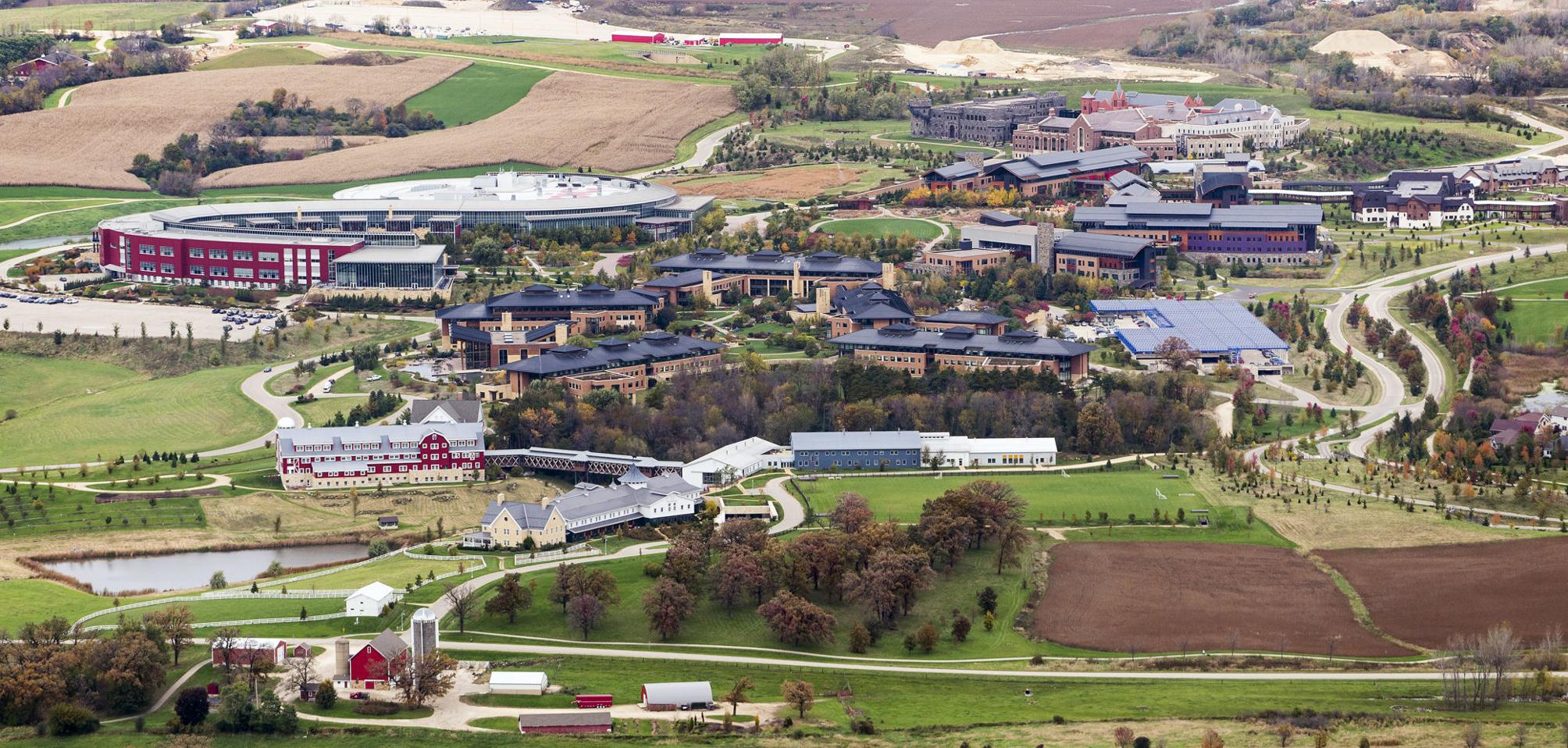
An aerial view of Epic System Corp.’s 1,100-acre campus in Verona includes the curved Voyager Hall and adjacent Epicenter that make up the Learning Campus on the far left, the newest Storybook campus on the upper right, the Wizards Academy campus at the top, the Prairie and Central Park campuses in the center, and the Farm Campus at center left, mirroring the working farm buildings on the property, at lower left.
Epic Systems over the years

This is the computer that held the first records for the company, founded in 1979, that became Epic Systems Corp. Founder Judy Faulkner was the sole full-time employee.
Epic Systems over the years
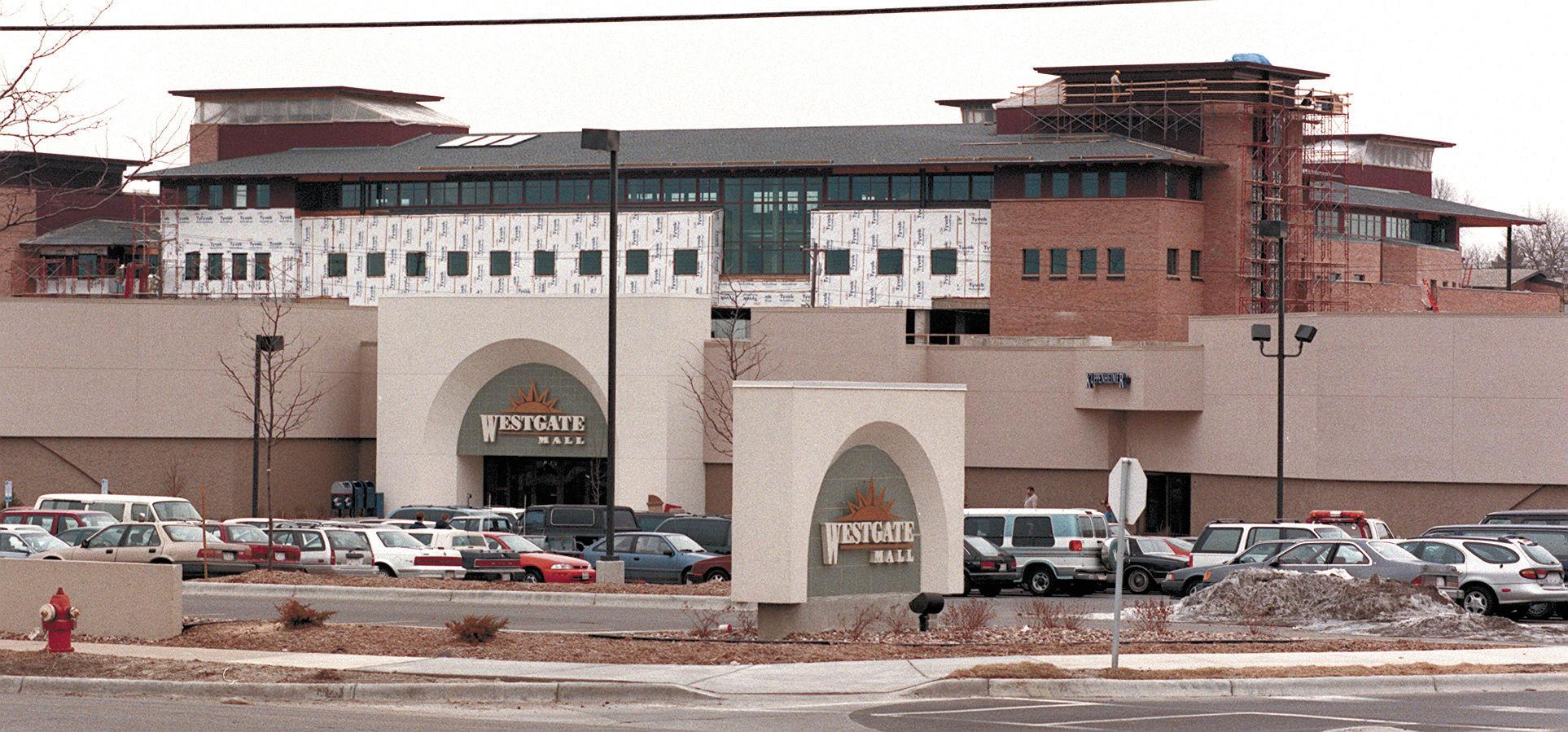
In the 1990s, Epic occupied the former Odana School building, 5301 Tokay Blvd., and ran out of space as the company grew. This 1997 photo shows construction of a $10 million addition, rising behind Westgate Mall.
Epic Systems over the years
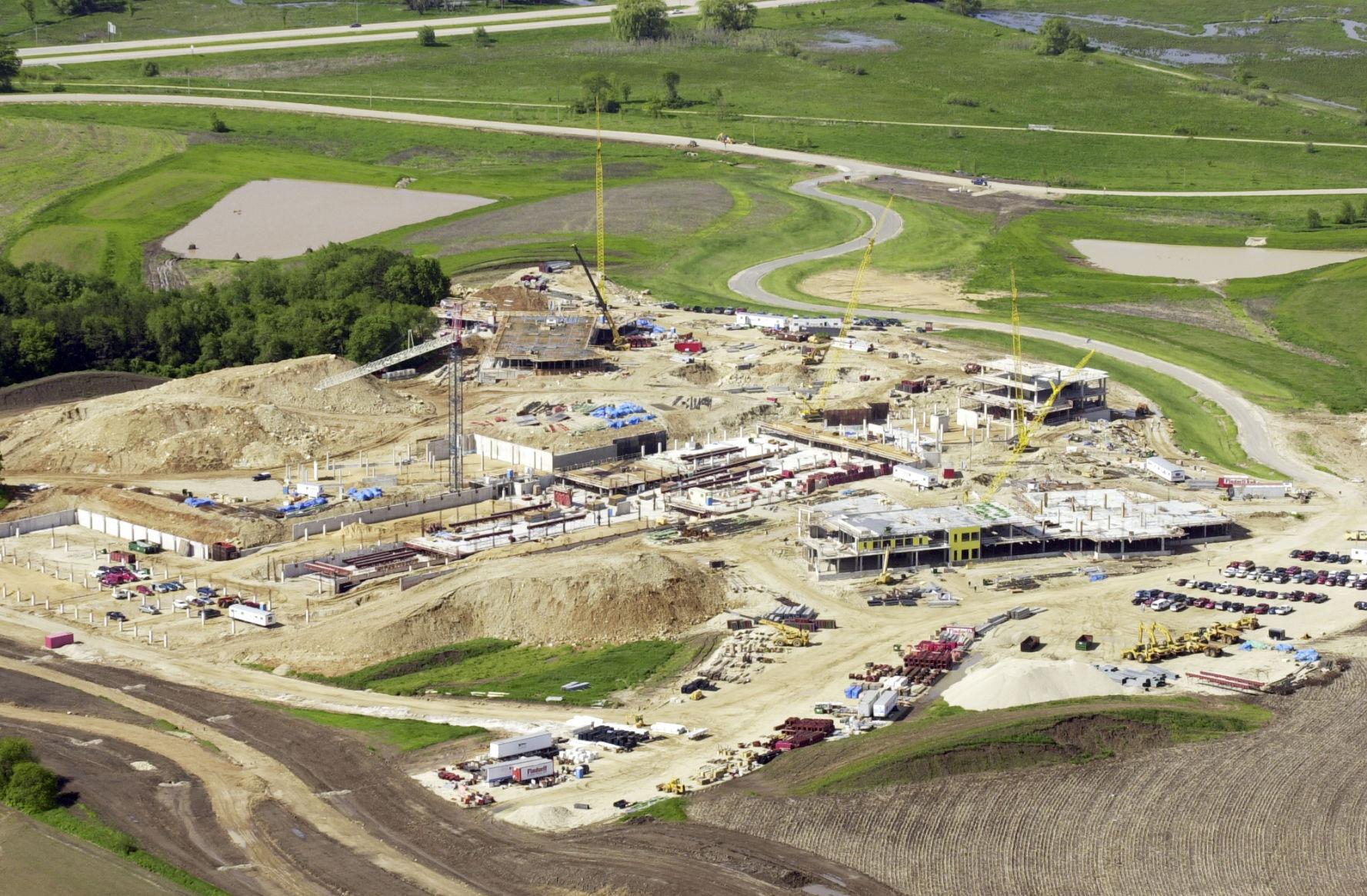
Foundations are poured for the first buildings at Epic Systems Corp.’s campus in Verona, in this photo from 2004. At the time, the company was planning for six office buildings to hold 1,200 employees. Today, employment at the electronic health records company is just under 10,000.
Epic Systems over the years

A view from one prairie-style building to another, in this photo of the Epic Systems Corp. campus in Verona in 2006.
Epic Systems over the years
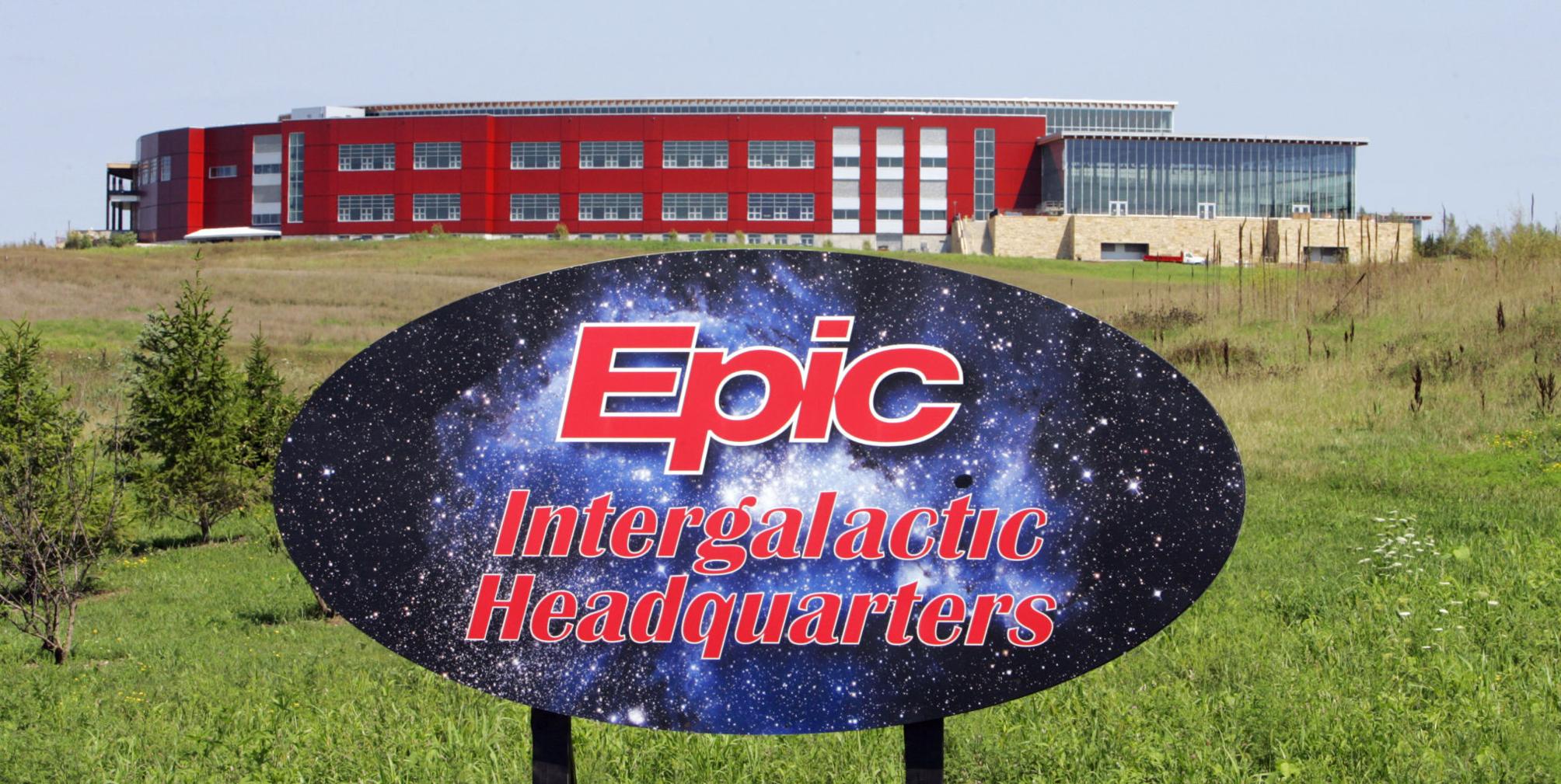
Epic’s red, curved Voyager Hall, part of the Learning Campus — shown in this 2007 photo — is a landmark for the sprawling campus in Verona.
Epic Systems over the years
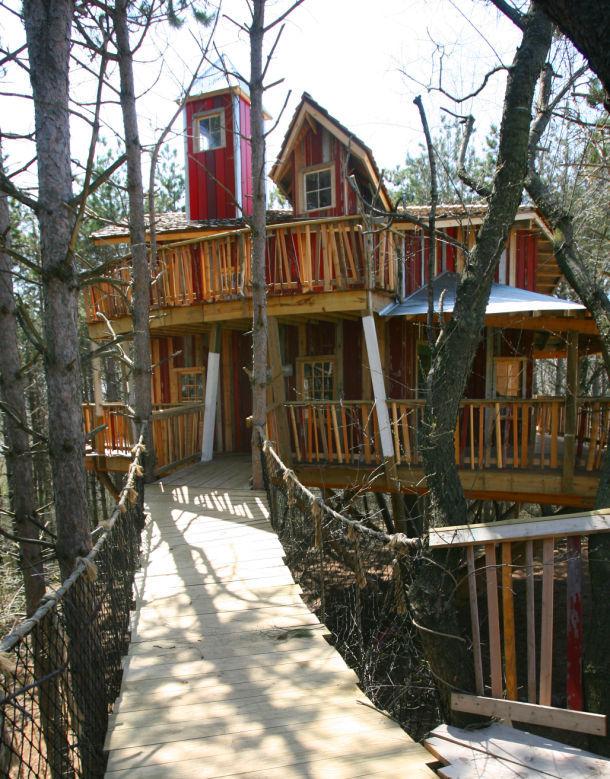
Ever wish you could leave your office behind and retreat to the haven of a cozy tree house? This one at Epic Systems is made of scraps and leftovers from Campus 1 construction. A cowbell chimes as employees step across the wooden suspension bridge. But inside, there are electric lights and plenty of sockets to plug in laptop computers.
Epic Systems over the years

Epic Systems Corp.’s Verona headquarters includes several sets of buildings designed with different themes, including its Farm Campus.
Epic Systems over the years

In keeping with the theme of Epic’s Farm Campus, a sitting area in one of the office buildings is decorated to look like a farm field with Holsteins grazing nearby.
Epic Systems over the years

Epic’s Verona campus is known for its colorful, unusual artwork, such as this wooden sculpture meant to express joy.
Epic Systems over the years

Epic’s whimsical artwork includes sculptures such as this, scattered around the campus and throughout the buildings of its Verona campus.
Epic Systems over the years

Epic’s Kings Cross building is the culinary center of the company’s Wizards Academy buildings.
Epic Systems over the years

Epic Systems bought the 1927 carousel from Ella’s Deli on East Washington Avenue along with many of the circus-related toys that entertained diners at the East Side restaurant.
Epic Systems over the years

Workers with JP Cullen work to disassemble the carousel outside the former Ella’s Deli in 2018. The carousel, purchased by Epic Systems Corp., has been put back together and is available to see on tours of Epic’s Verona campus.
Epic Systems over the years

Epic Systems Corp. founder and CEO Judy Faulkner
Epic Systems over the years

Construction on the EPIC campus in Verona.photo by David Sandell (PUBLISHED 7/29/04) Epic Systems’ $100 million-plus campus is taking shape on a 345 acre site on the west side of Verona, helping spur the rapid growth in “Hometown USA.”
Epic Systems over the years

Epic Systems Corporation, Madison, Wis., Thursday, June 5, 2003, develops software for health care. They’re big and they’re moving to Verona, Wis. as suggested in this campus look. WSJphoto/Joseph W. Jackson III (PUBLISHED 6/8/03) This model shows plans for Epic System Corp.’s $100 million campus designed by the Cuningham Group and Associates, Minneapolis, architect for the addition on Epic’s current building and Zimmer Gunsul Frasca Partnership, Seattle, whose projects include part of the Microsoft campus in Redmond, Wash. Each office building would house no more than about 300 employees. A planned treehouse is not shown.
Epic Systems over the years

For feature on Epic Systems, located in Verona. photo by Mike DeVries PUBLISHED 3-25-09 NO CAPTION
Epic Systems over the years

A massive hole in the ground is one sign of the progress on Epic’s Campus 2. Photographed Wednesday, April 23, 2008, at Epic Systems in Verona, Wis. Construction continues on “campus 2”. WSJ/John Maniaci (Published caption 4/27/08) This huge hole will become a four-story, underground parking ramp for Epic Systems Corp., the first structure of its Campus 2, as the electronic medical records company continues to expand its Verona headquarters. Four more office buildings are also part of the project.
Epic Systems over the years

Colorful park benches encourage larger groups of employees to sit together in the cafeteria. Photographed Wednesday, April 23, 2008, at Epic Systems in Verona, Wis. Construction continues on “campus 2”. WSJ/John Maniaci (Published caption 4/27/08) Brightly colored picnic tables beckon to diners at Epic Systems’ big employee cafeteria, which features different entrees, soups, sandwiches and desserts every day, prepared from scratch by a staff of 50. The picnic tables are a way to “get people together and build a neighborhood,” says Brian E. Miller, who shares executive chef duties with Mark Hale.
Epic Systems over the years

A waterfall greets employees as they move across the Epic land. Photographed Wednesday, April 23, 2008, at Epic Systems in Verona, Wis. Construction continues on “campus 2”. WSJ/John Maniaci (Published caption 4/27/08) A pond and waterfall outside the company cafeteria provide a peaceful harbor for Epic employees.
Epic Systems over the years

An old-fashioned treehouse is set in the middle of the modern Epic land. Photographed Wednesday, April 23, 2008, at Epic Systems in Verona, Wis. Construction continues on “campus 2”. WSJ/John Maniaci (Published caption 4/27/08) From the company’s rustic tree house in the woods, Epic employees have a view of the first set of tidy, low-slung office buildings that will soon be joined by a similar set, under construction now. The Verona medical records technology company has grown to 3,000 employees, up from about 900, five years ago.
Epic Systems over the years

Giant cranes mark the site of Campus 2. Photographed Wednesday, April 23, 2008, at Epic Systems in Verona, Wis. Construction continues on “campus 2”. WSJ/John Maniaci (Published caption 6/28/08) Cranes mark the site of Campus 2 in April, an expansion by Epic Systems under the direction of contractor J.P. Cullen & Sons Inc.
Epic Systems over the years

Aerial view of newly constructed building on Epic Systems campus in Verona. photo by Mike DeVries (Published 9/19/07) Epic System Corp.’s new learning center, with its giant “Epicenter” theater, welcomed for the first time clients gathering this week for the firm’s annual Users Group Meeting. The snaking learning center is part of the company’s growing Verona headquarters. PUBLISHED CAPTION 10-22-08 Epic Systems, Verona. Estimated value: $45 million (phase one) TIF assistance: $18 million.
Epic Systems over the years

Epic System campus, Verona, Wis., November 3, 2006. Joseph W. Jackson III – State Journal (PUBLISHED 11/12/06) Glass-enclosed walkways connect the first six buildings of Epic’s new campus at 1979 Milky Way, Verona.
Epic Systems over the years

The Epic Systems campus in Verona is one of the area’s largest employers and a leader in the Madison region’s booming tech economy.
Epic Systems over the years

The Epic Systems campus in Verona is one of the area’s largest employers and a leader in the Madison region’s booming tech economy. A new study finds the area is a national leader in the growth of technology jobs.
Epic Systems over the years

The Epic Systems campus in Verona, Wis.

:quality(70):focal(544x1110:554x1120)/cloudfront-eu-central-1.images.arcpublishing.com/businessoffashion/3STVJF35L5GVHDL5SP7D4BXBU4.jpg "Can Engineering Establish a Superior Current market for Fashion’s Unused Fabrics?")