New Method To Revolutionize Nanosensor Producing
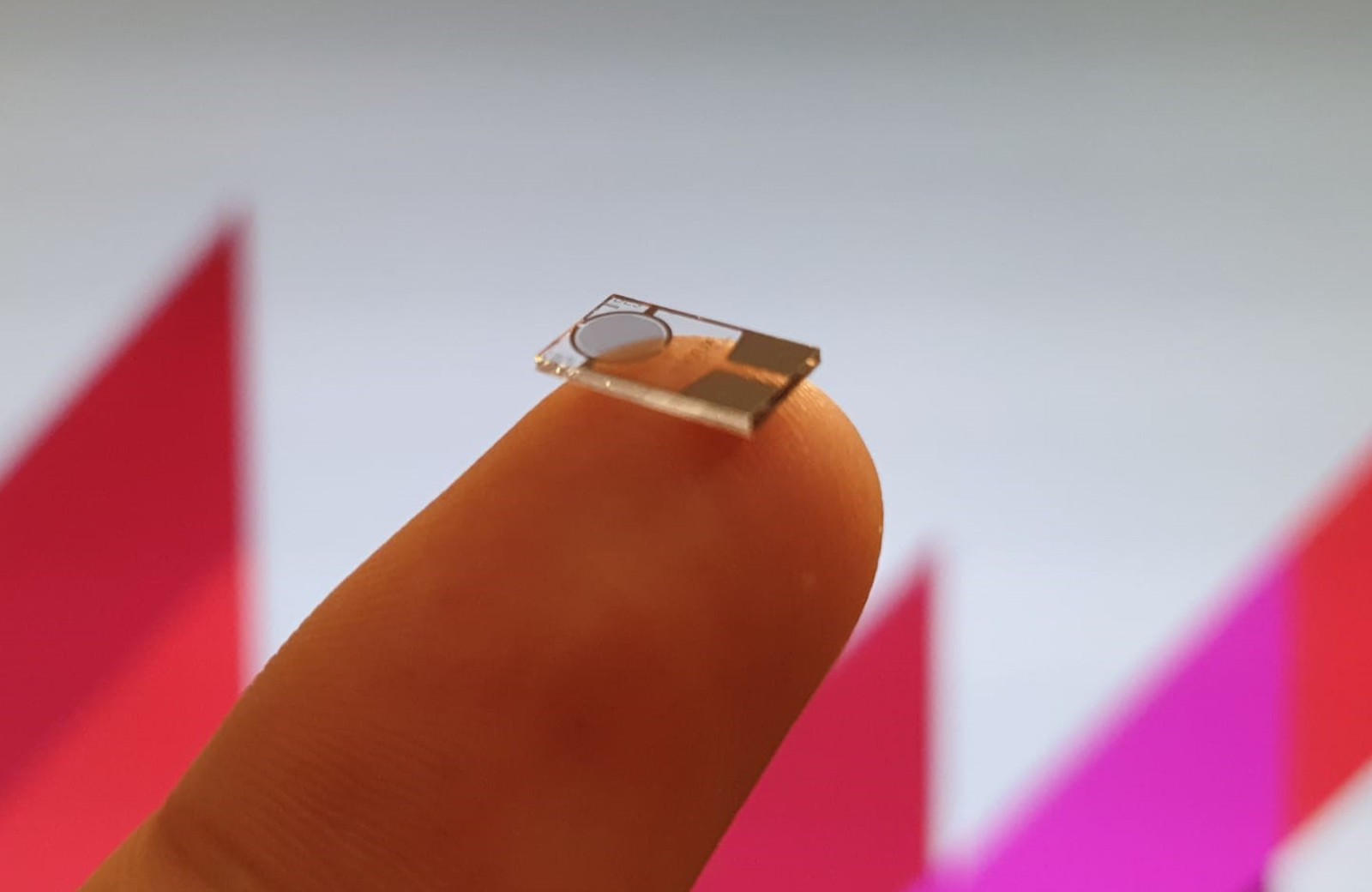
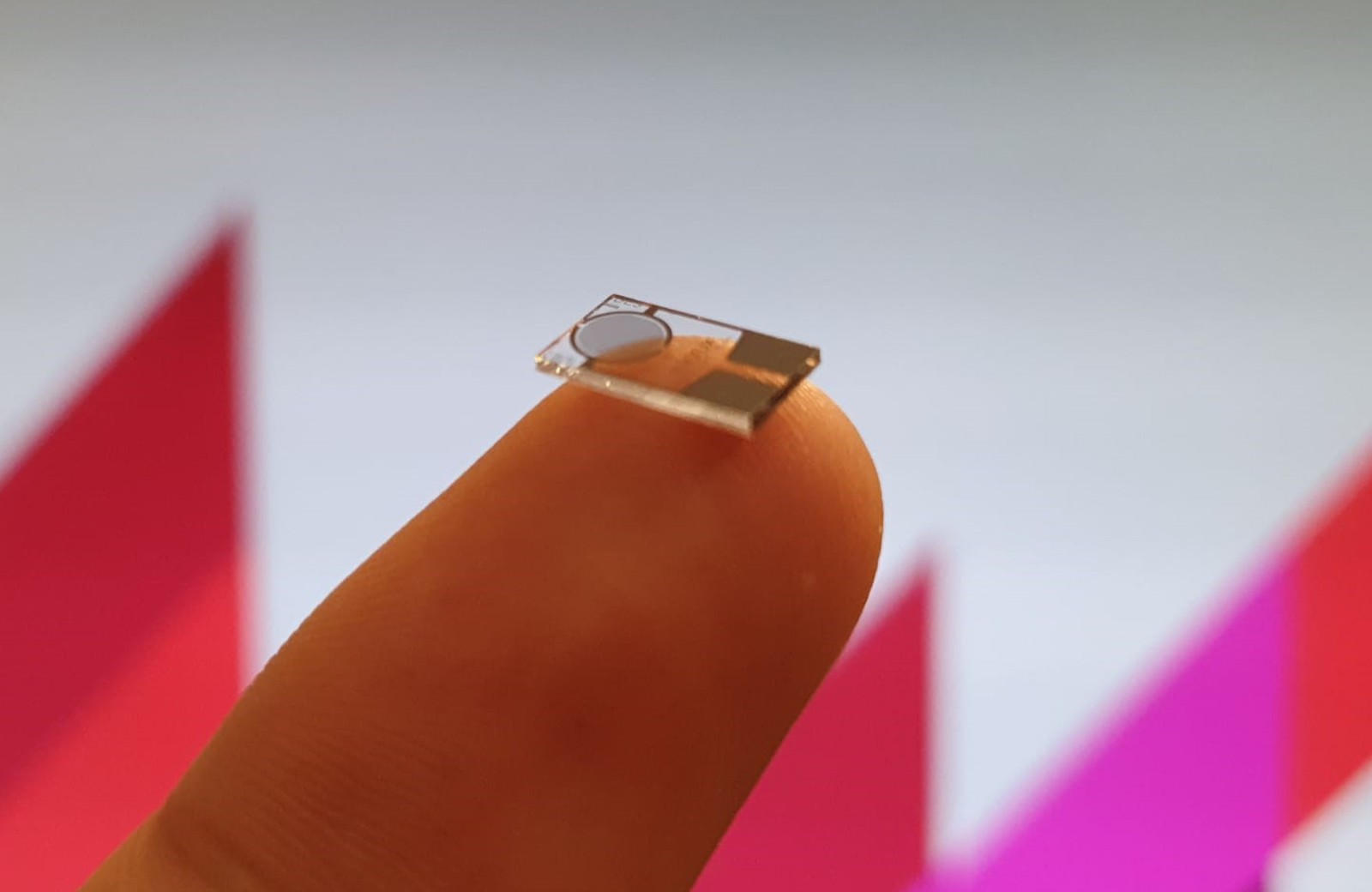
Nanoparticle sensors are more compact than a human fingernail. Credit score: Macquarie College
Engineers at Macquarie University have pioneered a new strategy for producing nanosensors that is significantly fewer carbon-intensive, cuts charges, and boosts efficiency and versatility, significantly improving upon a essential approach in this multi-trillion-dollar international sector.
The staff has located a way to take care of each individual sensor applying a single drop of ethanol alternatively of the regular course of action that involves heating supplies to substantial temperatures.
Their investigation was a short while ago published in the journal Highly developed Purposeful Materials.
“Nanosensors are normally made up of billions of nanoparticles deposited on to a little sensor surface area – but most of these sensors don’t work when 1st fabricated,” suggests corresponding writer Associate Professor Noushin Nasiri, head of the Nanotech Laboratory at Macquarie University’s School of Engineering.
The nanoparticles assemble them selves into a community held with each other by weak normal bonds which can go away so several gaps in between nanoparticles that they fail to transmit electrical signals, so the sensor will not perform.
Affiliate Professor Nasiri’s workforce uncovered the acquiring even though doing work to boost ultraviolet light sensors, the critical engineering behind Sunwatch, which saw Nasiri become a 2023 Eureka Prize finalist.
Nanosensors have substantial area-to-volume ratio built up of layers of nanoparticles, producing them really delicate to the material they are made to detect. But most nanosensors don’t work successfully until eventually heated in a time-consuming and vitality-intense 12-hour course of action making use of high temperatures to fuse layers of nanoparticles, creating channels that permit electrons to go as a result of levels so the sensor will perform.

Macquarie University experts Jayden Chen and Associate Professor Noushin Nasiri examination ethanol droplets on nanosensors. Credit rating: A/Prof Noushin Nasiri, Macquarie University
“The furnace destroys most polymer-based mostly sensors, and nanosensors containing little electrodes, like these in a nanoelectronic gadget, can melt. Numerous components just cannot at the moment be made use of to make sensors because they simply cannot withstand heat,” Associate Professor Nasiri states.
However, the new technique discovered by the Macquarie crew bypasses this heat-intensive method, enabling nanosensors to be produced from a substantially broader vary of supplies.
“Adding one particular droplet of ethanol on to the sensing layer, without having placing it into the oven, will assist the atoms on the area of the nanoparticles go all over, and the gaps concerning nanoparticles vanish as the particles to be a part of to each and every other,” Associate Professor Nasiri claims.
“We showed that ethanol considerably enhanced the performance and responsiveness of our sensors, outside of what you would get just after heating them for 12 several hours.”
The new process was found immediately after the study’s guide author, postgraduate student Jayden (Xiaohu) Chen, accidentally splashed some ethanol onto a sensor though washing a crucible, in an incident that would commonly wipe out these sensitive gadgets.
“I assumed the sensor was ruined, but afterwards recognized that the sample was outperforming every single other sample we’ve at any time designed,” Chen states.
Affiliate Professor Nasiri says that the incident could possibly have given them the idea, but the method’s usefulness depended on painstaking do the job to determine the precise volume of ethanol applied.
“When Jayden located this result, we went again pretty diligently striving unique quantities of ethanol. He was testing in excess of and more than once again to uncover what worked,” she suggests.
“It was like Goldilocks – three microlitres was also tiny and did almost nothing efficient, 10 microlitres was much too much and wiped the sensing layer out, five microlitres was just correct!”
The crew has patents pending for the discovery, which has the opportunity to make a really big splash in the nanosensor planet.
“We have made a recipe for creating nanosensors get the job done and we have examined it with UV gentle sensors, and also with nanosensors that detect carbon dioxide, methane, hydrogen and much more – the influence is the exact same,” states Associate Professor Nasiri.
“After a person properly calculated droplet of ethanol, the sensor is activated in all over a moment. This turns a sluggish, hugely strength-intense procedure into some thing considerably additional effective.”
Affiliate Professor Nasiri has currently been approached by providers in Australia and internationally who are eager to get the job done with her to place the technique into follow.
Reference: “Capillary-Driven Self-Assembled Microclusters for Highly Accomplishing UV Photodetectors” by Xiaohu Chen, Darren Bagnall and Noushin Nasiri, 3 August 2023, Superior Functional Materials.
DOI: 10.1002/adfm.202302808